
NAMES

When you’re expecting your first baby, you hear all kinds of yak-yak. Clichés come easy: “You’re going to be a great dad!” People start talking about themselves, spout off their own sentimental birth stories, offer unsolicited advice. My favorite has been the backhanded threat: “O, buddy, you better sleep now because once that baby comes…”
If only it worked that way.
As the due date draws near, though, what everybody wants to know, the first thing they ask, sometimes disclaiming the question in the same breath they pose it (“You don’t have to tell me, but”): what’s his name?
Here’s the thing. Growing up Doruk in Christian, white North Carolina, I used to have a lot of shame around my name. My immigrants and first-generation folk know the deal.
“I’m Doruk.”
“What?”
“Doruk.”
“What?”
It’s trite. But however humdrum it might appear in print, for the person living it, it’s still, at best, annoying as hell and — I won’t say “at worst,” but, you know, moving toward that end of the spectrum — debilitating, disorienting… what sows the seeds of a kind of Du Boisian double consciousness1…
I remember condemning my mom one night, back when I had looney tunes on my bedsheets, probably as she was humming a lullaby and rubbing my head: Why’d you name me this?
Coming up with baby names is tough, man. So difficult that at least somebody somewhere is paying $295 for a five-minute session with a “baby name consultant.”
I know that in these nihilistic times we’re all hellbent on functioning like businesses. I get that we boogie parents must display Inspector Gadget-like levels of ingenuity to shoulder our children up the socio-economic ladder. And that — other than a deep reverence for Mammon — we respect no culture or tradition that we might call our own. But, damn. It’s like we don’t know how to be ourselves. Like, the revelation and result of the influencer era is that we need a consultant or a critic to tell us what to like and why.
My mom’s response that night wasn’t some play on pride and heritage. No Hans Zimmer score for Mufasa to tell Simba he’s a Turkish prince. She was matter-of-fact, like, Well, I was gonna call you Nasreddin Hoca but your dad...2 She couldn’t have fathomed that I wanted to be a Michael or a Matt or a Paul. A Mother Mary Joseph.
Thinking about names made me go back and re-read Jamaica Kincaid’s In History.
One day, while looking at the things that lay before me at my feet, I was having an argument with myself over the names I should use when referring to the things that lay before me at my feet.
And then a funny thing happened. The baby arrived.
Damn it takes me forever to figure out what I want to say.3
We gave our baby a name. We sure did. They don’t let you leave the hospital without filling out the paperwork. He carries his given name, the name we gave him, and our family names, the names my wife and I were given. These names will affect the way he moves through the world. Of course they will. And, another truism, sorry, he will always be more than his name.
So what’s in a name? What’s in a name?
About Christopher Columbus’ arrival in the Caribbean and his immediate claiming of everything the light touches, Kincaid says this:
The way in which he wanted to know these things was not in the way of satisfying curiosity, or in the way of correcting an ignorance; he wanted to know them, to possess them … for it becomes clear: the person who really can name the thing gives it a life, a reality, that it did not have before.4
She could’ve been talking about Judge Holden from Cormac McCarthy’s Blood Meridian. The judge is a bona fide Iago, a monstrosity, Columbus’ colonial ideology reincarnate. Nearly seven feet tall and “bald as a stone,” the judge keeps a ledger of living things in a small notebook because, according to him, “Whatever in creation exists without my knowledge exists without my consent.”5
Naming a thing gives it life. It also takes it away.
Kincaid says of Columbus that his principle must’ve been that “to have knowledge of things, one must first give them a name.”
And there it is: must. To name is to have power, control. To possess.6
When you’re growing up in North Carolina and your name is Doruk and nobody knows how to pronounce it or what your parents were smoking at the hospital when you were born, you can go five, ten, thirty minutes talking to someone without offering up your name or asking the other. The kind of culture I grew up in, my name was more often an impediment to someone getting to know me than a revelation or a bond. But as I’ve gotten older, that’s changed. The world’s changed. And I’ve changed. I’ve felt more deeply how my name connects me to my roots, my ancestors. As I’m typing this, I’m watching my son sleep in his bassinet. I know (maybe feel is the better word here, because it’s not an intellectual exercise, but a spiritual connection) there was a time when my brother shared this same point of view with his kids. A time when my father did so with us. And his father with him.
Look, we’re meaning-making creatures. Simple and plain. And without historical continuity, meaning-making is damn near impossible. Meaning arrives not from naming alone, but from the complex context-driven ways in which words are used. In narrating. Too often these days it feels like our only source of history, culture, and tradition is Mammon: we must be marketable, our identities must be a source of profit.
Kincaid again: “in the beginning, the vegetable kingdom was chaos; people everywhere called the same things by a name that made sense to them, not by a name that they arrived at by an objective standard. But who has an interest in an objective standard? Who would need one?”
For a white Turk growing up in the ‘00s in a white North Carolina, the “peculiar sensation” of my two-ness was marked by its own dual ignorances: (1) nobody at school knew what the hell Turkey (that’s Türkiye to you now, mfer!) was and (2) that included me. Maybe every kid, at one time or another, feels a sort of self-consciousness that can be mapped onto Du Bois’ counter-hegemonic revelation. In my case, I was the teenager who wanted to be accepted so bad, wanted to conform more than anything else. It would be years before the sound of a delikanli crying out for his mama at the Istanbul airport (“Aaaa-ne!”) snapped me back to the pre-times. Made me remember and realize: That’s how I cried out for my mom, too.
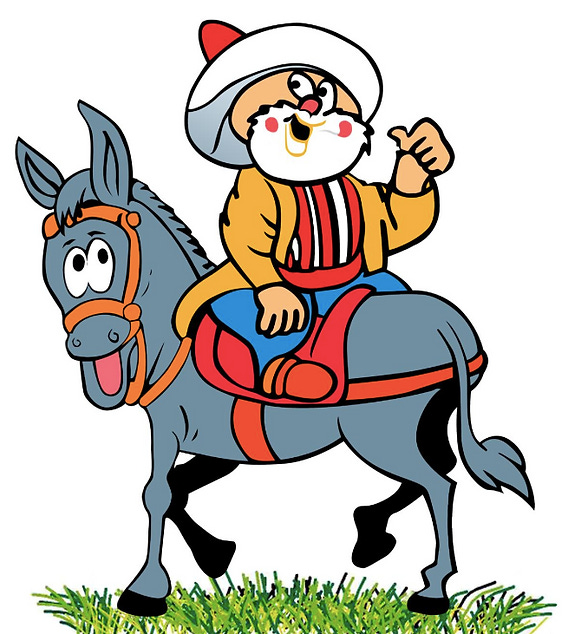
This is a joke. Nasreddin Hoca is a wise, lovable, silly ur-hero of many old Asian cultures.
Let me play like I’m not a master procrastinator and distracted by the zillion gizmos and gazmos of our time, and instead am like old Treebeard and his kin: “It takes a long time to say anything in old Entish, and we never say anything unless it is worth taking a long time to say.”
Full quotation here, because I like it: “The way in which he wanted to know these things was not in the way of satisfying curiosity, or in the way of correcting an ignorance; he wanted to know them, to possess them, and he wanted to possess them in a way that must have been a surprise to him. His ideas kept not so much changing, as they kept evolving: he wanted to prove the world was round, and even that, to know with certainty that the world was round, that it did not come to an abrupt end at a sharp cliff from which one could fall into nothing, to know that is to establish a claim also. And then after the world was round, this round world should belong to his patrons, the king and queen of Spain; and then finding himself at the other side of the circumference and far away from his patrons, human and other kind, he loses himself, for it becomes clear: the person who really can name the thing gives it a life, a reality, that it did not have before.”
A damn good passage:
He nodded toward the specimens he’d collected. These anonymous creatures, he said, may seem little or nothing in the world. Yet the smallest crumb can devour us. Any smallest thing beneath yon rock out of men’s knowing. Only nature can enslave man and only when the existence of each last entity is routed out and made to stand naked before him will he be properly suzerain of the earth.
What’s a suzerain?
A keep. A keeper or overlord.
Why not say keeper then?
Because he is a special kind of keeper. A suzerain rules even where there are other rulers. His authority countermands local judgements.
Toadvine spat.
The judge placed his hands on the ground. He looked at his inquisitor. This is my claim, he said. And yet everywhere upon it are pockets of autonomous life. Autonomous. In order for it to be mine nothing must be permitted to occur upon it save by my dispensation.
Toadvine sat with his boots crossed before the fire. No man can acquaint himself with everything on this earth, he said.
The judge tilted his great head. The man who believes that the secrets of the world are forever hidden lives in mystery and fear. Superstition will drag him down. The rain will erode the deeds of his life. But that man who sets himself the task of singling out the thread of order from the tapestry will by the decision alone have taken charge of the world and it is only by such taking charge that he will effect a way to dictate the terms of his own fate.
I don’t see what that has to do with catchin birds.
The freedom of birds is an insult to me. I’d have them all in zoos.
“Çok sahiplenmeyince, çok ait de olmazsın hem.” Can Yucel, Bağlanmayacaksın